The other day my oldest son hit a sharp line drive straight to the shortstop. We’ve been working on his hips turning and hitting to the pull side. It worked, hit one for to the left and it was through the 5.5 hole, yet a long hop straight into the glove of the shortstop turned a well struck ball into an easy out.
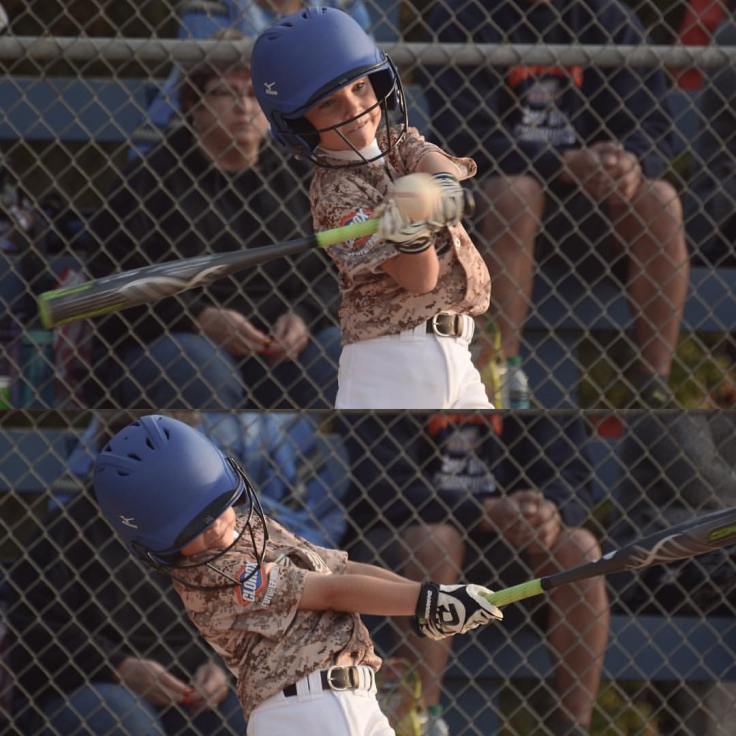
As he came back to the dugout I noticed he was frustrated. I tried to cheer him up, “You did exactly what we’ve been working on! You hit that hard!”
“I don’t want to hit it hard, I want to be safe.”
His remark reminded me of an experience I had last year:
One day after our game I was hanging around the field watching a 8 year-old little league game. I was dreading my younger son’s move up to this division next season. As I was reminiscing with a good friend all the reasons I don’t like 8 year-old baseball, the manager of one of the teams playing approaches me on the other side of the fence and asks if I would call catcher’s interference at this level. Depends on who’s catching, score of the game, etc. Then he told me how the other coach enforced a catcher’s interference that the umpire missed. He persuaded the umpire to make a call that the umpire (a teenage volunteer) didn’t understand. Every fiber of my baseball being was frayed with remorse. Not for anything I had done (on this occasion), but for all those (including myself) who have tried to win a baseball game by any other way than hits, runs and outs. When I see a manager of an 8-year-old baseball team winning games by enforcing rules that kids, parents, and in this case, umpires don’t understand — everyone loses. Rules exist to protect players, protect fair play and teach players right and wrong. They are not there so we can win. But when a 40+ year-old man enforces a technical rule from the bench to give his team an advantage — he has won the game, but team and the game loses integrity. There is no victory without honor. I have seen it time and time again — games won because the coach played the game via the rule book — rather than let the boys settle it on the field.
These coaches want to win more than their players. Most players I see at this stage are not trying to win — they are afraid of losing. I see a lot of players afraid of their coaches. Scared to death of making a mistake and hearing the consequences from the bench. I see coaches trying to pull out a win by all means necessary. If the kids can’t win the right way, via hits and outs, then they shouldn’t win. If they win because of declared darkness rules, time limits, etc (both which can be manipulated by coaches) then the game has lost its integrity. Coaches, players and umpires know who the better team was — but because the better team played fair and square, they lost.
Soon after the coach went back to the game a player on his team (his son) hit a simple ground ball back to the pitcher and was safe at first on an overthrow. The third and first base coach were screaming at the player to take second. The first base coach finally reached out and shoved the player off the base towards second. The runner, still didn’t understand what was going on. He flinched toward second and then decided to return to first base. Most baseball players know what this child is feeling — “I should be out but I’m not. I’m safe, I’m safe!” Take what the game gives you. My son comes home and tells me he went 3 for 3. That means he was safe three times. He doesn’t care yet if he hit a gapper or was safe on a swinging bunt — “safe” is the goal. Advancing to second ups the chance of getting out — that’s a risk maybe coach is willing to take, but not me because “I’m safe.” Advancing to second on an overthrow is for Monday’s practice or on the bench between innings. The irony is this: if the umpire knew better, that player is now out because a base coach touched him during a live ball.
U8 baseball is the perfect storm — the kids don’t know what they are doing, the parents don’t know what they’re watching, and the dad’s coaching forget what they’re there for. There’s something about a scoreboard and strike zone that cause men’s hearts to fail them.
Eventually this game is going to get you out. And if we don’t learn how to get out we’re going to have a very miserable existence. It is easy to be happy when you’re safe — especially when you should be out. If happiness is derived from success, then how we measure our success determines our ability to be happy. If success is safely reaching first base, then we might say someone’s else’s error is our happiness. If success is hitting the ball hard then we should be happy with solid contact despite the out. We can easily ruin our lives by living by a flawed definition of success. Winston Churchill and Abraham Lincoln (two leaders during hard times) have been attributed saying,“Success, isn’t the absence of failure, but going from failure to failure without any loss of enthusiasm.” If this is our measure of success then true happiness cannot be measured without the presence of failure. Though disappointed to the point of tears my son taught me that day that what true happiness was.

- #enthusiasm
The word enthusiasm is derived from the Greek enthousiazein meaning to “be inspired or possessed by a god, be rapt, be in ecstasy.” His tears were not born of entitlement. They were spawned by a deep reverence and enthusiasm for hitting. He did not walk out of the game, blame the umpire, or shame the shortstop. He went right back into the dugout, put on his gear, with a fierce enthusiasm to be better (He’s more like his mom than his dad that way). This weekend I heard a new twist on Lincoln’s and Churchill’s definition of success (aka Happiness), “Our happiness, isn’t going from failure to failure, but growing from failure to failure without any loss of enthusiasm.” Looking back on life I now know my failures are also my greatest success. Failure! What a gift. Thank you baseball.
Lynn G. Robbins
 Confessions of a Little League Dad
Reminds me Roosevelt’s “Man in the Arena” speech:
It is not the critic who counts; not the man who points out how the strong man stumbles, or where the doer of deeds could have done them better. The credit belongs to the man who is actually in the arena, whose face is marred by dust and sweat and blood; who strives valiantly; who errs, who comes short again and again, because there is no effort without error and shortcoming; but who does actually strive to do the deeds; who knows great enthusiasms, the great devotions; who spends himself in a worthy cause; who at the best knows in the end the triumph of high achievement, and who at the worst, if he fails, at least fails while daring greatly, so that his place shall never be with those cold and timid souls who neither know victory nor defeat.
LikeLiked by 1 person