
TODAY’S LEARNING JOURNEY COMES FROM
DOCTRINE & COVENANTS 41-42

REMEMBER: Prayer before gospel study invites the Spirit of the Lord to guide you and reveal truth.
EVER FEEL ALONE OR LIKE YOU JUST DON’T FIT IN?
Start your study today by listening to this encouraging song by Yahosh Bonner:
• • • • •

TODAY’S LEARNING ADVENTURE
HAS THREE GUIDED STUDY CHOICES
TODAY during your LEARNING ADVENTURE choose how you want to study
DOCTRINE & COVENANTS 41 or 42
As you study, record your thoughts and feelings in your Scripture Journal or in your Gospel Library digital notes.
• • • • •

CHOICE NUMBER ONE:
WILL THE REAL DISCIPLE PLEASE STAND UP?

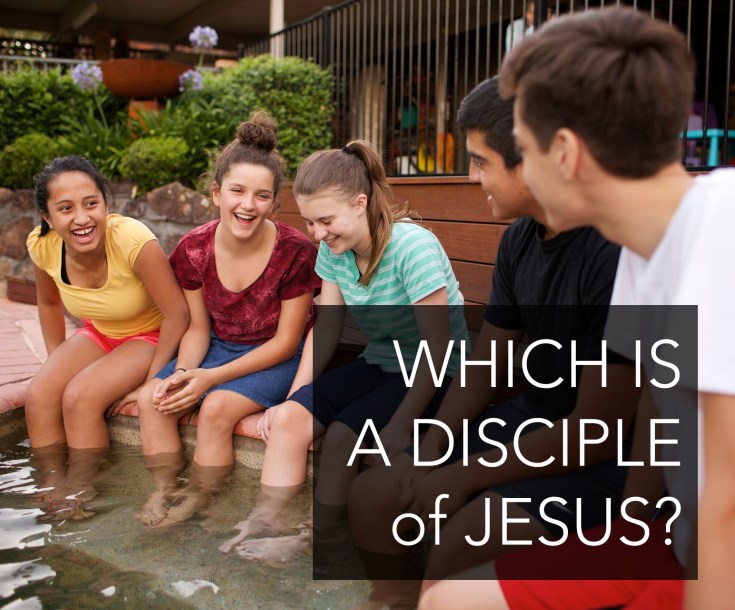
They could all be pros and disciples of Jesus. Until we see them perform, it’s impossible to tell.
What is the true definition of a disciple?
Jesus corrects their understanding of the scriptures by providing a definition of a disciple.
Read D&C 41:5 of the revelation given to Joseph Smith and the Saints in Kirtland and highlight the Lord’s definition of a disciple.
Read verse 6 and explain the proper use of members’ and the Church’s resources and property.
• Why would it be unhealthy for God to share property and blessings with unworthy disciples?
Often our relationships become damaged because we create unhealthy boundaries. Sometimes we give of our property, time, and efforts to please others and gain recognition when sometimes those who demand our resources are unworthy.
• How can you create healthier boundaries by following Jesus Christ and establishing expectations for those who are demanding of your gifts, talents, time, and possessions?
The Modern Disciple
Read how Jesus Christ concludes his message:
These words are pure before me, beware of how you hold them . . .
—D&C 41:12
When the Lord gives instructions to His prophets, they are pure and the measure of our discipleship, by definition of the word, is by how well we receive his law and do it.
In October 2018, President Nelson shared a very pure message to the Church:
Thus, the name of the Church is not negotiable. When the Savior clearly states what the name of His Church should be and even precedes His declaration with, “Thus shall my church be called,” He is serious. And if we allow nicknames to be used or adopt or even sponsor those nicknames ourselves, He is offended.
What’s in a name or, in this case, a nickname? When it comes to nicknames of the Church, such as the “LDS Church,” the “Mormon Church,” or the “Church of the Latter-day Saints,” the most important thing in those names is the absence of the Savior’s name. To remove the Lord’s name from the Lord’s Church is a major victory for Satan. When we discard the Savior’s name, we are subtly disregarding all that Jesus Christ did for us—even His Atonement (“The Correct Name of the Church,” October 2018 General Conference).
• How have you held this message? If you are no longer a Mormon then what are you? What do you call yourself?
• Perhaps next time someone asks if “you’re a Mormon?” You can say “I am not a Mormon, I am a disciple of Christ.”

DEEPEN YOUR LEARNING
1. STUDY D&C 41
Read verse 5 of the revelation given to Joseph Smith and the Saints in Kirtland and highlight the Lord’s definition of a disciple.
Read verse 6 and explain the proper use of members and Church resources and property.
2. THINK ABOUT something that relates to…
• Why would it be unhealthy for God to share property and blessings with unworthy disciples?
Often our relationships become damaged because we create unhealthy boundaries. Sometimes we give of our property, time, and efforts to please others and gain recognition when sometimes those who are demanding our resources are unworthy.
• How can you create healthier boundaries by following Jesus Christ and establishing expectations for those who are demanding of your gifts, talents, time, and possessions?
3. PREPARE for your class GATHERING:
• How have you held the Lord’s request to use the correct name of the Church?
• If you are no longer a Mormon then what are you? What do you call yourself?
CHOICE NUMBER TWO:
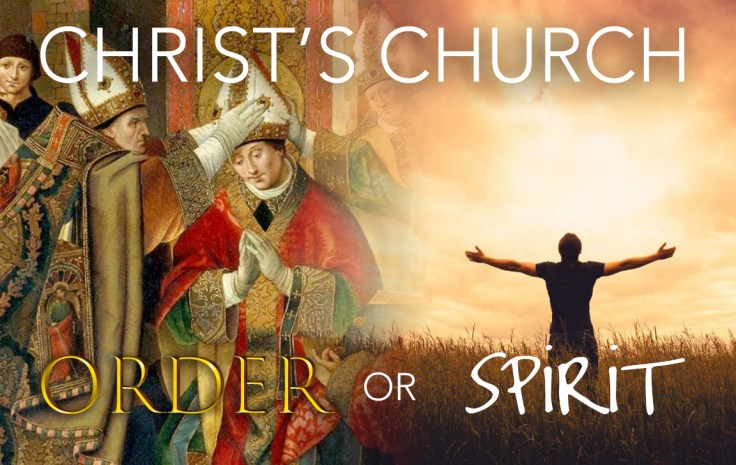
IS CHRIST’S CHURCH AN AUTHORITATIVE INSTITUTION?
OR
A FREE OUTPOURING OF THE SPIRIT AND ITS GIFTS?
STUDY the following verses to see Jesus’ response to the question:
• Is Christ’s Church authoritative? Study D&C 42:11-12, 31-32, 41-42
• Is Christ’s church a spontaneous outpouring of the Spirit? Study D&C 42:13-17, 61
Based on these verses how would does Jesus describe the organization of His Church?
Years later in Nauvoo, a man asked Joseph Smith about the organization of the Church. He asked the Prophet “how it was that he was enabled to govern so many people, and to preserve such perfect order; remarking at the same time that it was impossible for them to do it anywhere else. Mr. Smith remarked that it was very easy to do that. ‘How?’ responded the gentleman; ‘to us it is very difficult.’ Mr. Smith replied, ‘I teach them correct principles, and they govern themselves.’”
In the recent general conference Elder Bednar defined a gospel principle as:
“A doctrinally based guideline for the righteous exercise of moral agency. Principles derive from broader gospel truths and provide direction and standards as we press forward on the covenant path” (“The Principles of My Gospel,” April 2021 General Conference).
Elder Dallin H. Oaks adds:
“I [do] not suggest detailed rules, since the circumstances in various wards and branches in our worldwide Church are so different that a specific rule that seems required in one setting may be inappropriate in another. Rather, I will suggest a principle based on the doctrines. If all understand this principle and act in harmony with it, there should be little need for rules. If rules or counseling are needed in individual cases, local leaders can provide them, consistent with the doctrines and their related principles” (“The Aaronic Priesthood and the Sacrament,” October 1998 General Conference).
• Do you feel like your membership in Christ’s Church is a set of rules or a series of principles?
• What is the advantage of being centered on gospel principles rather than gospel rules?
• Identify one principle in D&C 42:40-43 that you can focus on applying this week?
DEEPEN YOUR LEARNING
1. STUDY D&C 42 LOOKING to see if…
• Christ’s Church is authoritative? See D&C 42:11-12, 31-32, 41-42
• Christ’s church is a spontaneous outpouring of the Spirit? See D&C 42:13-17, 61
2. THINK ABOUT…
• Do you feel like Gospel is a set of rules or a series of principles?
3. PREPARE for your class GATHERING:
• What is the advantage of being centered on gospel principles rather than gospel rules?
• What do you like about the order of the Church? When do you feel the freedom of the Spirit in your membership?

CHOICE NUMBER THREE:
HOW HARD COULD IT BE!? IT’S ONLY A MOUNTAIN…
What is the Law of Consecration?
In D&C 42:30-36 the Lord establishes the Law of Consecration. Steven Harper summarizes the law this way:
“The law clarified that consecration did not envision communal ownership of property. Rather, it required [those who are] willing to acknowledge that the Lord was the owner of all. That each of the Saints was to be a hardworking ‘steward over his own property (D&C 42:32)’ and thus accountable to the actual owner, the Lord, who required that the Saints freely offer their surplus to His storehouse to be used to relieve poverty and build Zion (see D&C 42:34-36).” (Revelations in Context).
The Law of consecration is more than giving. It is a code of conduct. “Consecration is keeping the two great commandments, where the key words are love and all. ‘Thou shalt love the Lord thy God with all thy heart, and with all thy soul, and with all thy strength, and with all thy mind; and thy neighbour as thyself’ (Luke 10:27; emphasis added).” (BYU RSC)
A Consecrated Code of Conduct
In verse 55, the law of consecration is summarized in a single verse,
“If thou obtainest more than that which would be for thy support, thou shalt give it into my storehouse” (D&C 42:55).
In a money-driven world, we tend to measure our giving in dollars and cents. Consecration, however, is not just a financial transaction.
It is an exchange — all you have for all He has. (Hint: You get the better deal.) This exchange is measured in conduct, not cash.
In the Gospel of Jesus Christ, to consecrate (con = “with” + sacra = “sacred”) means to be pure, clean, and holy.
STUDY D&C 42:40-55 and make a list of the conduct of a consecrated saint by using the principle stated in the verse to dictate what you will do.
FOR EXAMPLE: I am consecrated (pure, clean, holy) when . . .
v. 40 I dress in a manner that is pleasing to God.
v. 41 I use clean language and work to keep my thoughts and actions appropriate.
v. 42 ___________________________
v. 43 ___________________________
v. 45 ___________________________
v. 52 ___________________________
v. 53 ___________________________
Look at your list and read the following quote from President Nelson’s talk from this most recent general conference:
The Lord does not require perfect faith for us to have access to His perfect power. But He does ask us to believe.My dear brothers and sisters, my call to you this Easter morning is to start today to increase your faith. Through your faith, Jesus Christ will increase your ability to move the mountains in your life, even though your personal challenges may loom as large as Mount Everest.Your mountains may be loneliness, doubt, illness, or other personal problems. Your mountains will vary, and yet the answer to each of your challenges is to increase your faith. That takes work. Lazy learners and lax disciples will always struggle to muster even a particle of faith.To do anything well requires effort. Becoming a true disciple of Jesus Christ is no exception. Increasing your faith and trust in Him takes effort (“Christ is Risen; Faith in Him Will Move Mountains,” April 2021 General Conference).
You exercise faith through efforts to consecrate your conduct. In exchange, His perfect power will move the mountains in your life.
DEEPEN YOUR LEARNING
1. STUDY D&C 42
Study D&C 42:40-55 and make a list of the conduct of a consecrated saint by using the principle stated in the verse to dictate what you will do.
2. THINK ABOUT something that relates to…
How is consecration more a code of conduct than a giving of resources?
3. PREPARE for your class GATHERING:
Why is the law of consecration work?

 Confessions of a Little League Dad
Leave a comment