A Temple Recommend Interview for the Church
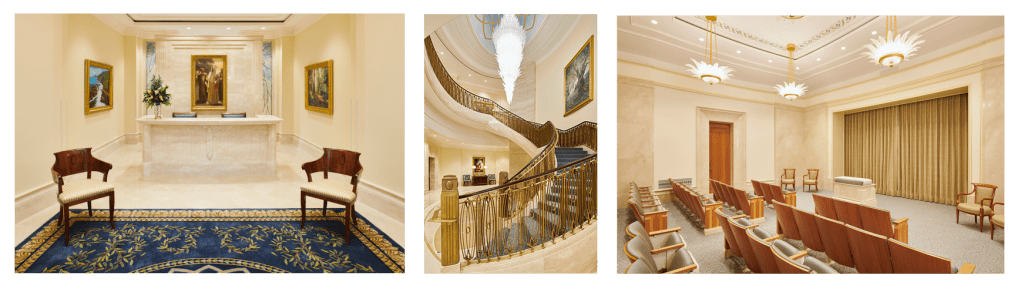
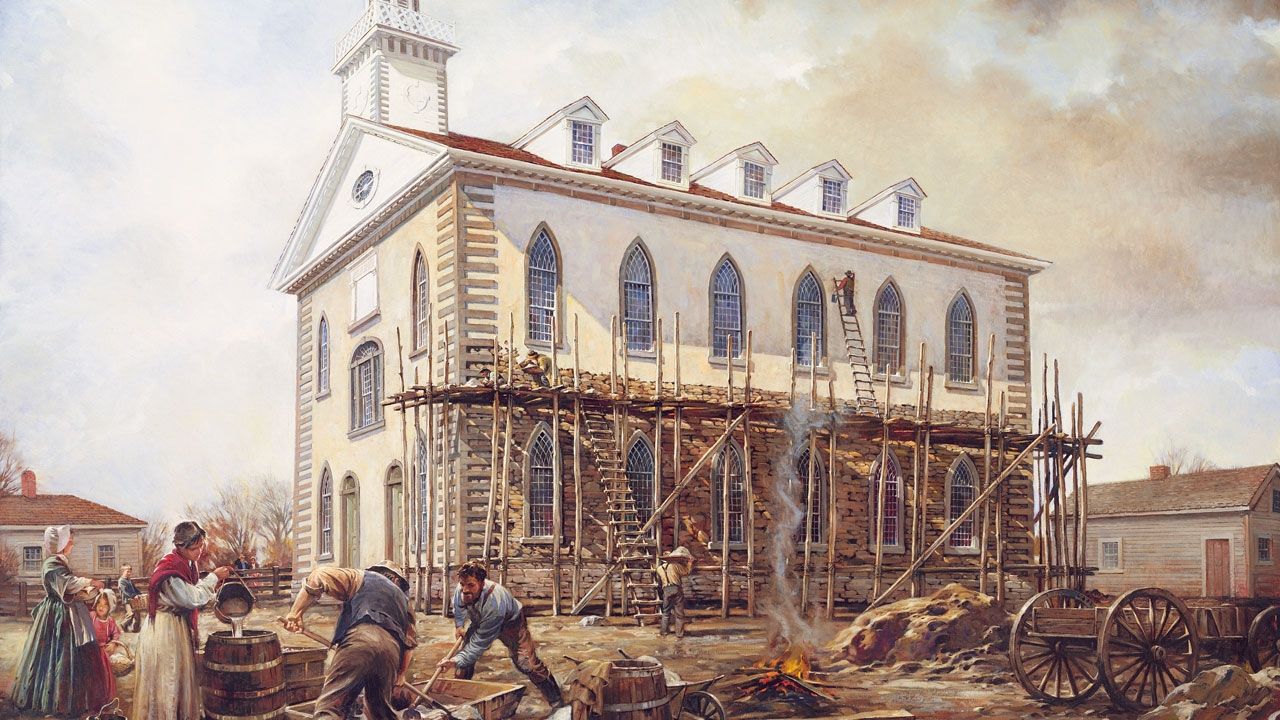
Before you and I can enter the temple, we must have a signed recommend from an approved Priesthood authority. The temple is the Celestial Kingdom on earth. Those worthy to enter its doors are striving to live a celestial law in a telestial world. The years surrounding the construction of the Kirtland Temple, the first temple in this dispensation, the Saints experienced telestial turbulence. Persecutions and mob violence had dislocated thousands of Saints from their lawful homes in Jackson County Missouri. The Lord had commanded them to build Zion in Independence and now they are refugees in nearby Clay County. They Saints wanted to fight back. The Prophet Joseph asked the Lord what to do. The revelations received at this time are like a temple recommend interview, preparing the Saints to live a celestial law and be endowed with the power to enter God’s presence.
Here is a timeline showing where these revelations fall in relation to the events of the period:
1831 A branch of 70 Saints first settle in Missouri (Colesville Branch)
1833 Latter-day Saint Population in Jackson County reaches 1200, one third of the county’s population
July 1833 Mob violence demands the departure of the Saints resulting in the tarring and feathering of Church leaders and the destruction of the printing press
July 23rd, 1833 The mob under threat of violence, demand that the Saint’s complete departure by April 1. On this same day the cornerstones of the Kirtland temple are laid.
August 2nd, 1833 Sections 94 and 97 are recorded by Joseph Smith in a letter to the Missouri Saints
October 31st, 1833 A mob of 50 horsemen attack the Saint settlements in Missouri. Over the next few days Latter-day Saint men struggle to protect their property. One is killed and two Missourians are also dead. Saints abandon their homes and two women die as they flee by foot to Clay County.
January 1, 1834 Parley P Pratt and Lyman Wight leave the refugee Saints in Clay County to travel for seven weeks to Kirtland to meet with Joseph Smith. They arrive on February 22nd .
February 17th, 1834 Section 102 is recorded, organizing a high council, the same high council that would organize Zion’s Camp
February 24th, 1834 Joseph receives a revelation (D&C 103) calling for them to recruit a company, march to Missouri and redeem Zion.
April 23rd, 1834 Section 104 is revealed reorganizing the United Order instilling principles of consecration
May 8, 1834 Zions camp assembles and begins its 1000 mile march to Missouri
June 22nd, 1834 On the outskirts of Jackson County Joseph receives a revelation (Section 105) that they are not to do battle with Missourians and to disperse.
July 3rd , 1834 Zions Camp is released and its members separate
“Every activity, every lesson, all we do in the Church, point to the Lord and His holy house.”
Russell M. Nelson
President Russell M. Nelson reminded us that “every activity, every lesson, all we do in the Church, point to the Lord and His holy house. Our efforts to proclaim the gospel, perfect the Saints, and redeem the dead all lead to the temple. Each holy temple stands as a symbol of our membership in the Church, as a sign of our faith in life after death, and as a sacred step toward eternal glory for us and our families” (“Personal Preparation for Temple Blessings,” Ensign, May 2001, 32; Liahona, July 2001, 37).
Our efforts to enter the temple impact every aspect of our life: from how use our time to how we spend our money.
Read D&C 105:12 and highlight the word endowment. The word endowment means “a gift.” Write “a gift” in the margins or make a note in your app.
In this context, the temple endowment is literally a gift from God whereby He bestows sacred blessings upon you. The endowment can only be received in His way and in His holy temple.
Some of the gifts you receive through the temple endowment include:
1. Greater knowledge of the Lord’s purposes and teachings.
2. Power to do all that God wants us to do.
3. Divine direction and protection as we serve the Lord, our families, and others.
4. Increased hope, comfort, and peace.
5. Promised blessings now and forever.

As much as Zion was a designated place for the Saints to gather, the Lord recognized that the people needed to match the place.
Read D&C 105:5 What is the standard of living for the residents of Zion?
President Benson has taught:
“Celestial laws, embodied in certain ordinances belonging to the Church of Jesus Christ, are complied with by voluntary covenants. The laws are spiritual. Thus, our Father in Heaven has ordained certain holy sanctuaries, called temples, in which these laws may be fully explained. The laws include the law of obedience and sacrifice, the law of the gospel, the law of chastity, and the law of consecration.”
A Vision and a Hope for the Youth of Zion, BYU devotional, April 12, 1977
Just like our recommend interviews make us eligible to participate in the ordinances, the Lord used the persecutions of the Saints from Jackson County as well as the efforts to reclaim their property to prepare the Saints to receive an endowment of God’s power.
As we study these sections look for evidence of these Celestial laws in the revelations:
- Law of Obedience
- Law of Sacrifice
- Law of the Gospel
- Law of Consecration
Law of Obedience
“Obedience is not only the first law of heaven. Obedience is the first law of everything. Everything that I know that matters requires that initial commitment to obey the word and the will of the Lord. It’s the first covenant that we make in the temple.”
Elder Jeffrey R. Holland, Visits Philippines, Shares Message on Love, Church Newsroom
Study D&C 105:1-10 | What is the challenge of obeying a celestial law while living in a telestial world?
Law of the Gospel
What is the law of the gospel?
“As individual members of the Church, you and I participate in the Lord’s ‘own way.’ At least once a month, we fast and pray and contribute generous offerings to funds that enable bishops to disperse aid. This is part of the law of the gospel. Each of us truly can help the poor and the needy, now, and wherever they are. And we, too, will be blessed and protected from apostasy by so doing.”
In the Lord’s Own Way, April 1986 general conference
“We covenant to live the law of the gospel. The law of the gospel embraces all laws, principles, and ordinances necessary for our exaltation. We agree to exercise faith in Jesus Christ and sincere repentance borne out of a broken heart and a contrite spirit. As we comply with the ordinances of baptism and confirmation, and continue in faith and prayer, the power of the Savior’s atoning sacrifice covers our sins and we are cleansed from all unrighteousness. … The law of the gospel is more than understanding the plan of salvation. It consists of partaking of the ordinances and the sealing powers culminating in a man being sealed up unto eternal life. ‘Being born again,’ said the Prophet Joseph Smith, ‘comes by the spirit of God through ordinances.’”
Teachings of Ezra Taft Benson, 337
D&C 104:15-18, Look-up Footnote 18b | Why is living the Law of the Gospel difficult in our current world? D&C 103:6-13
Dallin H. Oaks taught, “Readjusting our desires to give highest priority to the things of eternity is not easy. We are all tempted to desire that worldly quartet of property, prominence, pride, and power. We might desire these, but we should not fix them as our highest priorities (Desire CR, 2011).”
What does the Law of the Gospel teach us about God’s priorities?
SACRIFICE OF ALL THINGS
Use the following quotes to identify the difference between the sacrifice and consecration?
“All our service in God’s kingdom is predicated on his eternal law which states: ‘The laborer in Zion shall labor for Zion, for if they labor for money they shall perish.’ (2 Ne. 26:31.)
Sacrifice and consecration are inseparably intertwined. The law of consecration is that we consecrate our time, our talents, and our money and property to the cause of the Church: such are to be available to the extent they are needed to further the Lord’s interests on earth.
The law of sacrifice is that we are willing to sacrifice all that we have for the truth’s sake—our character and reputation; our honor and applause; our good name among men; our houses, lands, and families: all things, even our very lives if need be.
Joseph Smith said, ‘A religion that does not require the sacrifice of all things never has power sufficient to produce the faith necessary [to lead] unto life and salvation.’ (Lectures on Faith, p. 58.)”
Bruce R. McConkie Obedience, Consecration, and Sacrifice, GC April 1975
“Consecration is related to and builds upon sacrifice. The word consecrate means to develop and ‘dedicate to a sacred purpose.’ Sacrifice is what we will offer, surrender, yield, or give up. Consecration, on the other hand, is to fully develop and dedicate to a sacred purpose. … As we live the law of consecration, we are willing not only to offer anything and everything that we possess for the sake of the gospel—but we also promise to develop and devote our best selves—our time, our talents, and our ever-increasing capacity—to the building of the kingdom of God on the earth. Our pledge is: I will give me and all that I can become, and I will live for the gospel of Jesus Christ. The principle of sacrifice is a lesser-law preparation for the principle of consecration. Consecration includes and encompasses sacrifice and much more. … True consecration is motivated by charity and produces an increased desire to serve. In these latter days, more is required of us as children of the covenant than our money, substance, and time. We need to consecrate unto the Lord our whole souls.”
David A. Bednar, “Your Whole Souls as an Offering Unto Him,” January 5, 1999
Law of Sacrifice
“We are still commanded to sacrifice, but not by shedding blood of animals. Our highest sense of sacrifice is achieved as we make ourselves more sacred or holy. This we do by our obedience to the commandments of God. Thus, the laws of obedience and sacrifice are indelibly intertwined. Consider the commandments to obey the Word of Wisdom, to keep the Sabbath day holy, to pay an honest tithe. As we comply with these and other commandments, something wonderful happens to us. We become disciplined! We become disciples! We become more sacred and holy—like our Lord!”
Lessons from Eve, October 1987 general conference
Study the following verses and make a list of what the Lord is asking us to sacrifice. Next to that list create a second, listing what our sacrifices produce?
D&C 97:8-12
Though this is outside the assigned scripture block, it falls within the timeline of the Saints being persecuted in Missouri.D&C 103:11-15, 27-28, 36
D&C 105:23-27, 31, 35-41
Law of Consecration
“Our life on earth is a stewardship of time and choices granted by our Creator. The word stewardship calls to mind the Lord’s law of consecration (see, for example, Doctrine and Covenants 42:32, 53), which has an economic role but, more than that, is an application of celestial law to life here and now (see Doctrine and Covenants 105:5). To consecrate is to set apart or dedicate something as sacred, devoted to holy purposes. True success in this life comes in consecrating our lives—that is, our time and choices—to God’s purposes (see John 17:1, 4; Doctrine and Covenants 19:19). In so doing, we permit Him to raise us to our highest destiny.”
Reflections on a Consecrated Life, Elder Christofferson October 2010 general conference
D&C 105:5, 15, 29 What do you have that you could consecrate to God’s purposes? What choices have you consecrated to God?
D&C 104:17-18, 48-50 Use these verses to explain why you feel the Lord would want Church members to do Church business in their own names?
D&C 103:35 When do you feel like you are a part of Zion? How could you help the Church and it’s meetings feel more like Zion?
CASE STUDYS
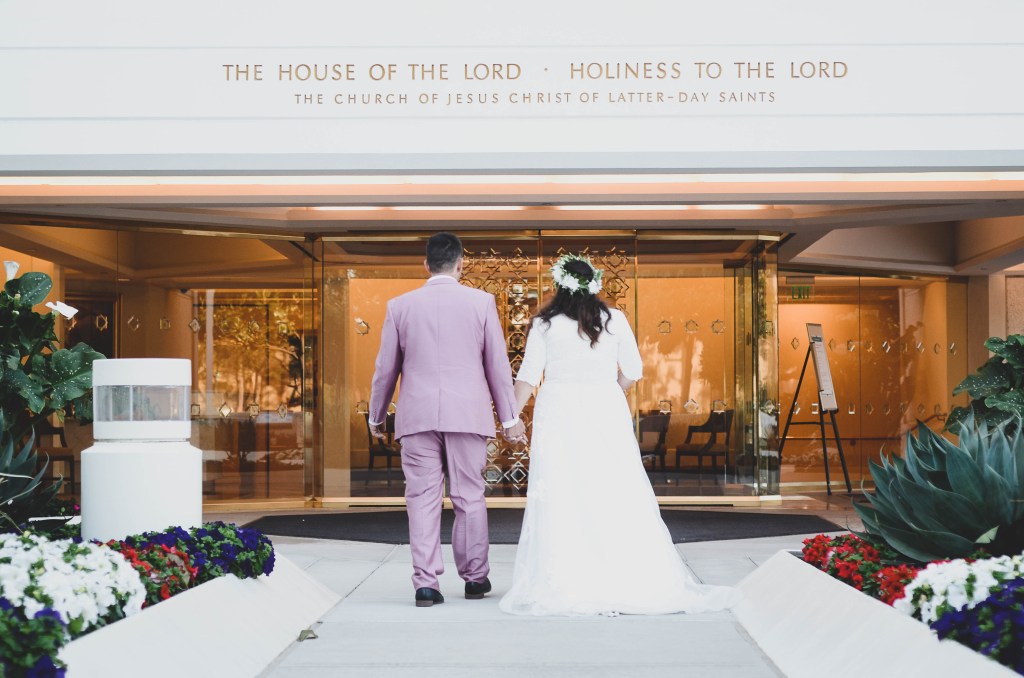
According to The Knot 2020 Real Weddings Study the average wedding cost was $19,000. After seeing the Church’s temples and understanding that marriages are performed there, many will ask members of the Church how much it costs to get married there? The answer is, “no charge.”
After your study, what is the true price of entering the temple to receive an endowment of power and/or be sealed?
The Church’s webpage dedicated to the Temple Endowment states, “Members of the Church who are at least 18 years old (and no longer attend high school, secondary school, or the equivalent) may receive their temple endowment if they are faithful and prepared. Because temple ordinances and covenants are sacred and have eternal significance, members must be worthy and sufficiently able to understand the solemn responsibilities they will accept as they make covenants with God. Members who have received a mission call or are engaged to be married in the temple may receive the endowment. The bishop can also counsel with other adult members who wish to receive the endowment.”
http://www.ChurchofJesusChrist.org/temples
 Confessions of a Little League Dad
Leave a comment