The Blind Men and The Elephant
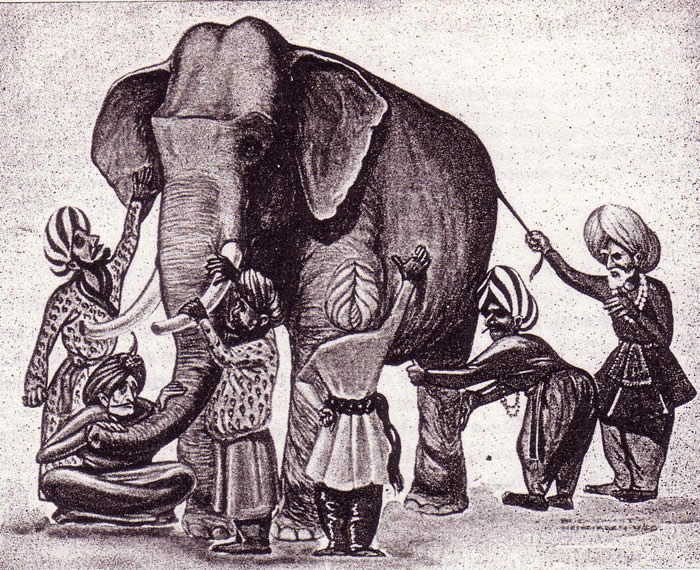
It was six men of Indostan, to learning much inclined,
who went to see the elephant (Though all of them were blind), that each by observation, might satisfy his mind.
The first approached the elephant, and, happening to fall,
against his broad and sturdy side, at once began to bawl:
“God bless me! but the elephant, is nothing but a wall!”
The second feeling of the tusk, cried: “Ho! what have we here, so very round and smooth and sharp? To me tis mighty clear, this wonder of an elephant, is very like a spear!”
The third approached the animal, and, happening to take,
the squirming trunk within his hands, “I see,” quoth he,
the elephant is very like a snake!”
The fourth reached out his eager hand, and felt about the knee: “What most this wondrous beast is like, is mighty plain,” quoth he; “Tis clear enough the elephant is very like a tree.”
The fifth, who chanced to touch the ear, Said; “E’en the blindest man can tell what this resembles most; Deny the fact who can, This marvel of an elephant, is very like a fan!”
The sixth no sooner had begun, about the beast to grope,
than, seizing on the swinging tail, that fell within his scope, “I see,” quothe he, “the elephant is very like a rope!”
And so these men of Indostan, disputed loud and long,
each in his own opinion, exceeding stiff and strong,
Though each was partly in the right, and all were in the wrong!
John Godfrey Saxe
Sister Barbara Gardner teaches,
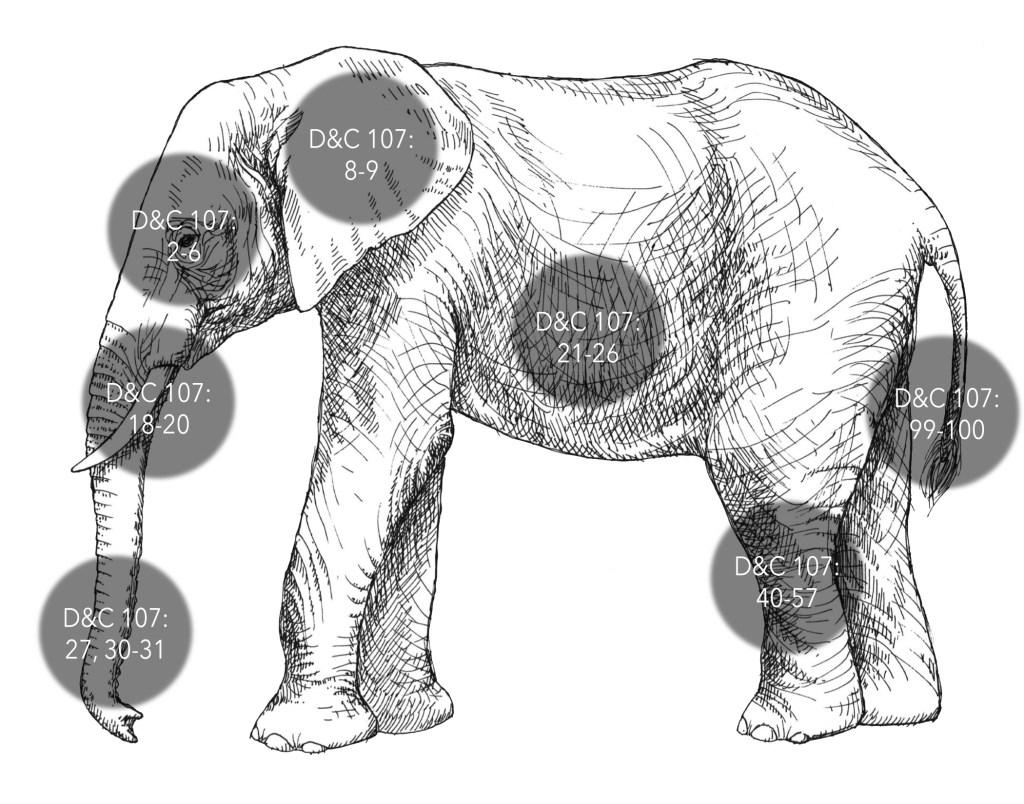
“In many ways, trying to understand the priesthood is similar [to these blind men]. Let’s say, for example, using the above analogy, that the priesthood is the entire elephant, and the different parts of the elephant are different aspects of the priesthood. Some see only the trunk of the elephant and call it ‘the priesthood,’ but they are really talking only about the men who are ordained to offices in the priesthood. Although that terminology is correct, it is only partially correct. Many are so accustomed to looking only at the trunk of the elephant that they forget, or have never realized, that they are not seeing the entire elephant. They may even correct others for being misguided (The Priesthood Power of Women).”
Elder Renlund and his wife Ruth explain,
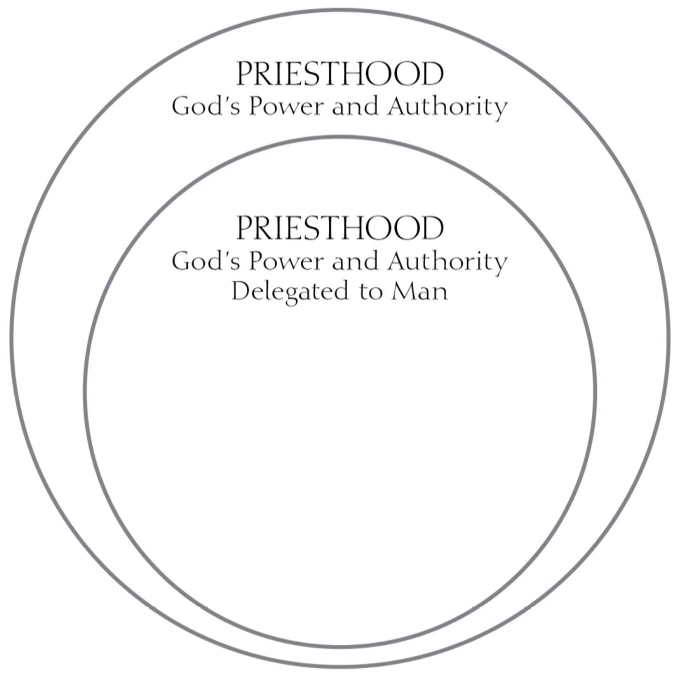
“Even many members of the Church who accept, love, and appreciate the priesthood may find themselves ‘fuzzy’ on the doctrine and principles. Perhaps that is because the term priesthood is used in at least two ways. First, priesthood is the term used to describe the total power and authority of God. Second, priesthood is also the term used to describe the power and authority that God gives to ordained priesthood holders on earth to act in all things necessary for the salvation of God’s children. This second usage is the widely accepted definition of the priesthood. For example, Preach My Gospel defines priesthood as the authority and power that God gives to man to act in the name of Jesus Christ in all things for the salvation of mankind. Thus, the same word, priesthood, refers both to God’s total power and authority and to that portion of His power and authority that He delegates to man on earth (The Melchizedek Priesthood).”
Sister Barbara Gardner adds,
“In addition, over the history of the earth, the Lord has used two primary structures, frameworks, or governments in which the priesthood is administered: hierarchical/ecclesiastical and patriarchal/familial. During the time of Adam and Eve and throughout the Old Testament, the structure of priesthood government was patriarchal/familial. During the time of Christ and the beginning of the Restoration, however, the ecclesiastical or hierarchical structure that we are more familiar with today was introduced. . . . according to Elder McConkie, the Church could operate in the ‘easiest and [most] harmonious way because of the social setting that exists in the world. And the social circumstances of the nations and the governments are such today that we can’t operate through families like they did in Abraham’s day. You can’t have civil and ecclesiastical authority combined because the great masses of men don’t belong to the Church.’ The organizational structure of the Church therefore went from patriarchal/familial to hierarchical/ecclesiastical.
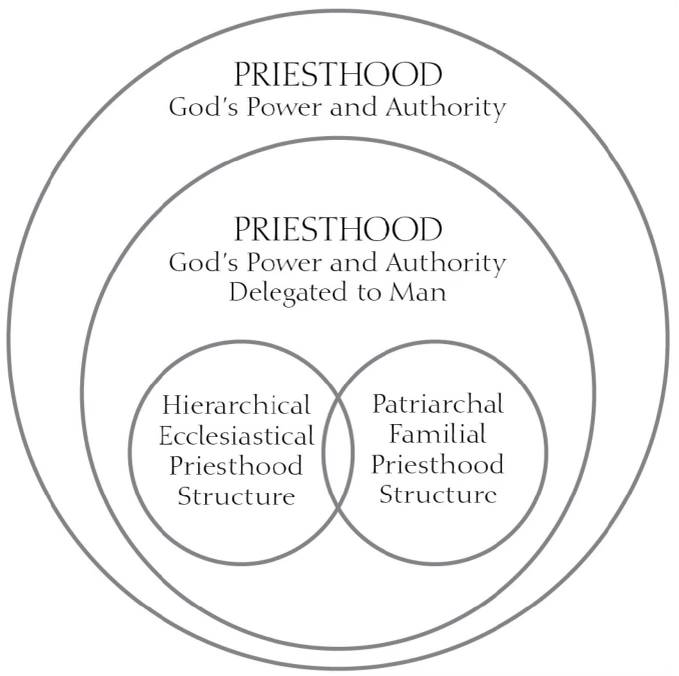
During our dispensation, both the hierarchical and patriarchal/familial government structures have been in use. The hierarchical structure governs the priesthood used primarily in Church and is thus more public. The patriarchal/familial structure is used primarily in the more private and sacred settings of the temple and home. President Dallin H. Oaks affirmed, “A most important difference in the functioning of priesthood authority in the family and in the Church results from the fact that the government of the family is patriarchal, whereas the government of the Church is hierarchical (The Priesthood Power of Women).”
Thus, the now popular phrase, “home centered, church supported.”
Lets take our time to look at the whole elephant as we study Section 107. Study the verses and identify:
- Are the verses referencing Ecclesiastical Priesthood (Priesthood Offices, Callings, Church organization), Familial Priesthood (ordinances, covenants, family order and temple), or both.
- What is the power or purpose of the principle/doctrine described in these verses?
- Identify if these verses apply to men only or both men and women.
 Confessions of a Little League Dad
Leave a comment