The Church Handbook states the following:
The Aaronic Priesthood is “an appendage to … the Melchizedek Priesthood” (Doctrine and Covenants 107:14). It includes the keys of:
- The ministering of angels.
- The gospel of repentance.
- Administering in outward ordinances, including baptism for the remission of sins.
The phrase, outward ordinances, is only used two time in all of scripture D&C 107:14, 20. The handbook mentions baptism as one of the ordinances. After a quick analysis of Aaronic priesthood duties, we could assume the sacrament is another. What sets these apart as outward ordinances? Are the ordinances of the Melchizedek Priesthood not outward? The Church has not offered a definitive definition, but a brief study of the history of the Aaronic priesthood may offer insight.
The Book of Mormon prophets taught the difference between Aaronic priesthood ordinances and Melchizedek:
“Therefore there was a law given them, yea, a law of performances and of ordinances, a law which they were to observe strictly from day to day, to keep them in remembrance of God and their duty towards him. But behold, I say unto you, that all these things were types of things to come (Mosiah 13:30-31).”
“Behold, they believed in Christ and worshiped the Father in his name, and also we worship the Father in his name. And for this intent we keep the law of Moses, it pointing our souls to him; and for this cause it is sanctified unto us for righteousness, even as it was accounted unto Abraham in the wilderness to be obedient unto the commands of God in offering up his son Isaac, which is a similitude of God and his Only Begotten Son (Jacob 4:5).”
The Law of Moses (Outward Ordinances performed by Aaronic Priesthood) served the same purposes of Baptism and Sacrament—pointing our souls to Christ, keeping us in a remembrance of God and our duty towards him, and preparing us for things to come. Such outward, in this context meaning surface, ordinances possess the power to prepare, but not to save or exalt. Along these lines we might say: though baptism is an essential ordinance, baptism does not save. Just like the Law of Moses had essential requirements, the Law of Moses did not save.
Another distinction between Aaronic and Melchizedek Priesthoods helps differentiate ordinances performed by the different offices.
Joseph Fielding McConkie explains:
“’The power and authority of the lesser, or Aaronic Priesthood, is to hold the keys of the ministering of angels, and to administer in outward ordinances, the letter of the gospel, the baptism of repentance for the remission of sins, agreeable to the covenants and commandments’ (107:20). It does not, however, have the POWER and authority to administer the ordinances of full salvation, as does the Melchizedek Priesthood, and is ‘made without an oath,’ while ‘the Priesthood of Melchizedek is by an oath and covenant’ (Smith, 5:555). Thus, all the authority the Lord gave to the tribe of Levi was held by John the Baptist and conferred by him upon Joseph Smith and Oliver Cowdery on 15 May 1829 (13:1; Mal. 3:1–4; Smith, 5:256–57).”
Like the Nephite Prophets acknowledged, since the Aaronic Priesthood is established without an oath from God, it has the power of temporal salvation but not power to grant eternal life and exaltation. Aaronic ordinances are preparatory for a future salvation.
McConkie continues:
“The Melchizedek Priesthood ‘is the channel through which all knowledge, doctrine, the plan of salvation, and every important matter is revealed from heaven’ (Smith, 4:207). This priesthood holds the ‘key of the mysteries of the kingdom, even the key of the knowledge of God’ (84:19), and the power to enter into God’s presence (84:20–26). Only through this priesthood can Saints receive the knowledge whereby they might ‘pass by the angels, and the gods, which are set there, to their exaltation and glory in all things’ (132:19).
“The power and authority of the higher, or Melchizedek Priesthood, is to hold the keys of all the spiritual blessings of the church—to have the privilege of receiving the ‘mysteries of the kingdom of heaven, to have the heavens opened unto them, to commune with the general assembly and church of the Firstborn, and to enjoy the communion and presence of God the Father, and Jesus the mediator of the new covenant’ (107:18–19). Only in the oath and covenant of the holy priesthood is the promise of exaltation found. The oath associated with the Melchizedek Priesthood represents the promise of the Father that those who keep the covenant they make in receiving the Melchizedek Priesthood will receive all that God has, a promise so profound and so far beyond human comprehension that to dramatize its truthfulness the Father attests to it by way of an oath, ‘which he cannot break, neither can it be moved’ (84:40). The language of the oath and covenant are as follows:
“’For whoso is faithful unto the obtaining these two priesthoods of which I have spoken, and the magnifying their calling, are sanctified by the Spirit unto the renewing of their bodies. They become the sons of Moses and of Aaron and the seed of Abraham, and the church and kingdom, and the elect of God. And also all they who receive this priesthood receive me, saith the Lord; for he that receiveth my servants receiveth me; and he that receiveth me receiveth my Father; and he that receiveth my Father receiveth my Father’s kingdom; therefore all that my Father hath shall be given unto him. And this is according to the oath and covenant which belongeth to the priesthood’” (84:33–44). Thus, those who receive the two priesthoods (Aaronic and Melchizedek) and magnify their calling become rightful heirs to all the power and authority given to Moses and Aaron, and they also become heirs to all priesthood blessings promised to Abraham and his seed (Abr. 2:9–11). They will, through their faithful service, be ‘sanctified by the Spirit unto the renewing of their bodies’ (84:33). As both body and spirit are made clean, they are able to put off the natural man and enjoy the company of angels and a state of purity that will enable them to enter into the presence of God. Of them the Lord has said, ‘They who dwell in his presence are the church of the Firstborn; and they see as they are seen, and know as they are known, having received of his fulness and of his grace; and he makes them equal in power, and in might, and in dominion’ (76:94–95).” Priesthood, Doctrine and Covenants Reference Companion
Baptism prepares men and women for the first Melchizedek ordinance– the receiving of the companionship of the Holy Ghost by the laying on of hands. It is this baptism by fire that brings with it a new tongue, and the remission of sins by the Holy Ghost (see 2 Nephi 31:13-14, 17). Though confirmation is performed publicly, the ordinance does not require witnesses. It does require authority. The divine injunction “I say unto you, receive the Holy Ghost,” cannot be made without the authority of the Melchizedek priesthood holder, which injunction is oath bound, that Father truly will give all that He hath to those who are willing (baptism) to receive it (confirmation).
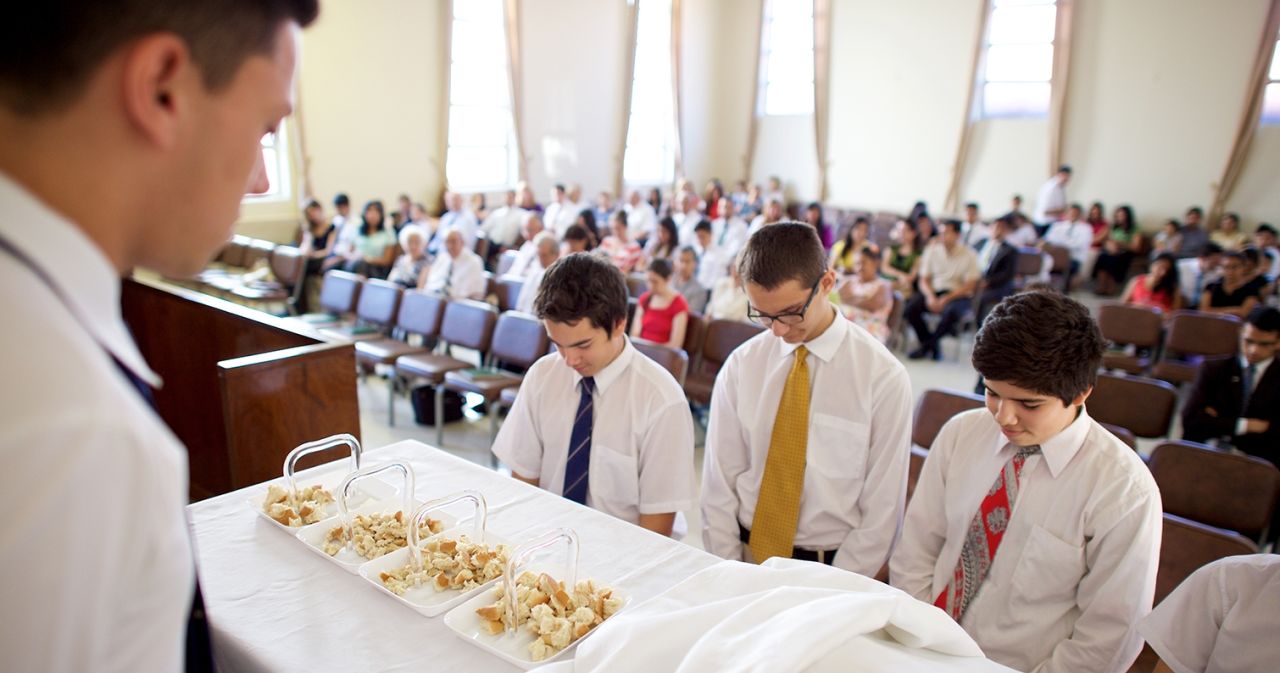
The sacrament is a Law-of-Moses-esque ordinance that points our souls to Christ, sanctifying our worship, and keeping us in remembrance. Since we don’t take the sacrament for the dead, it is not an essential, salvific ordinance. Partaking of the bread and water keeps us on the covenant path, it is not the destination. Thus, it can be administered by the lesser, preparatory priesthood, preparing us for the greater exalting ordinances that begin with receiving a member of the Godhead as our constant companion and end in the exalting ordinances of the temple.
Outward, according to Websters 1828 dictionary, is defined as:
OUT’WARD, adjective [Latin versus.]
1. External; exterior; forming the superficial part; as the outward coat of an onion; an outward garment.
2. External; visible; opposed to inward;
3. Extrinsic; adventitious.
http://www.webstersdictionary1828.com/Dictionary/outward
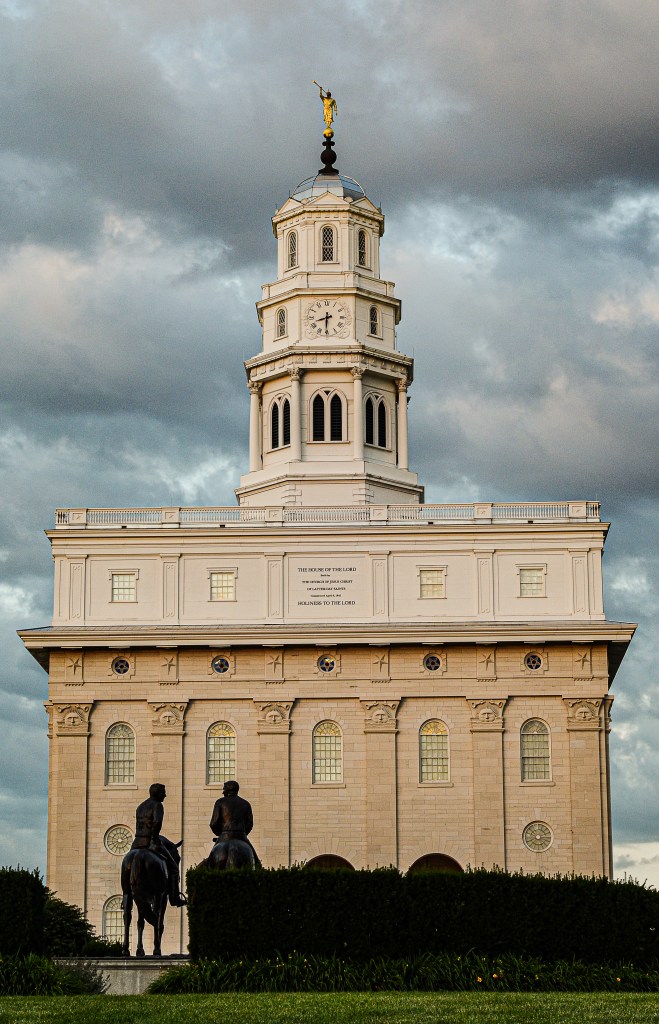
The second definition makes me think of why baptism and the sacrament are, for lack of a better word, public events. Baptism requires a minimum two witnesses and the sacrament is a congregational meeting of the Church. What we see people doing outwardly demonstrates a willingness to follow and obey (see 2 Ne 31:10). As we enter the ordinances of the Melchizedek priesthood the effects are much more subtle. The sacrifice of a broken heart and a contrite spirit are invisible to the witnesses and congregation at hand. The Lamanites experienced the baptism of fire and “knew it not (3 Nephi 9:20).” While baptism and sacrament certainly impact the inner nature of our being; the oath bound ordinances of the Melchizedek Priesthood eventually require us to leave the public and enter into the privy of His presence.
In his third definition, Webster uses the word adventitious meaning “coming from outside; not native; foreign.” Both the acts of immersing others under water and partaking of flesh and blood are not typical behaviors; they are a spiritual invitation for a natural man/woman to exit their world through the gate of baptism, yield to the enticings of the straight and narrow path and pressforward with a steadfastness in Christ until the end. The high adventure of becoming a Saint.
 Confessions of a Little League Dad
Leave a comment